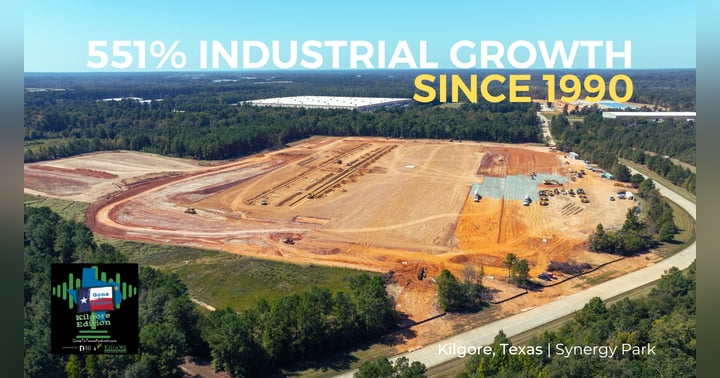
EP01 - Kilgore Spotlight Series: The Big Picture: Kilgore’s Economic Future


In the first of our special series of Gone To Texas, highlighting Kilgore, TX, Dave sits down with Lisa Denton, Executive Director of the Kilgore Economic Development Corporation. The conversation opens with a look at Kilgore’s history and its transformation from an oil boomtown to a diversified industrial center. Lisa shares how Kilgore’s industrial tax base has grown 551% since the formation of the Kilgore EDC in 1990, despite setbacks from the loss of legacy energy companies.
The discussion highlights the features and advantages of Synergy Park, a Class A campus-style industrial park with amenities like nature trails and a stocked lake, designed to attract and retain skilled workers. Lisa Denton talks about Kilgore’s commitment to building relationships with businesses and helping them succeed by providing ongoing support, connecting them to resources, and facilitating access to workforce training through local colleges. The episode also covers Kilgore's approach to regional and global competition, efforts in marketing and international outreach, and ongoing projects and expansions by companies such as Skeeter Boats and Camfil.
If you would like to learn more about which region in Texas is right for you to expand or relocate your business, click here to take our complimentary assessment or connect with us today for more information.
Lisa Denton [00:00:00]:
In the 35-year history from 1990 to 2025, our industrial tax base alone has grown 551%.
"Super" Dave Quinn [00:00:09]:
That's amazing.
Lisa Denton [00:00:10]:
And that does not count for the losses that we had just most recently in 2019, 2020, because we lost a lot of our oil or our energy companies that had been here for years. Halliburton, some of those companies that had had a presence here since the 1930s, some major companies. And they left. And that was a very hard— those were very hard years.
"Super" Dave Quinn [00:00:41]:
Welcome to Gone to Texas, the official podcast of the Texas Economic Development Connection. On every episode, we share the stories of business owners and CEOs who have relocated or expanded their business into Texas. Our goal is to use these stories as a guide to help others who are ready to hang a sign on the door that says, "Gone to Texas." And now, please welcome your host, the managing partner and chief inspiration officer for Day One Experts, Super Dave Quinn. Welcome back to the Gone to Texas podcast, powered by Day One Experts, where we share real stories of business growth, relocation, and entrepreneurship here in the Lone Star State. Today's episode is sponsored by our good friends at the Kilgore Economic Development Corporation, who are helping business owners grow and expand their business every day right here in the Upper East Texas region. Today we're kicking off our special Kilgore Spotlight series with a big picture look at Kilgore's economic future. My guest is Lisa Denton, the executive director of the Kilgore EDC, here to talk about the project's vision and opportunities that make Kilgore one of the Texas's most competitive locations. I'm your host, Super Dave Kwan, welcoming Lisa Denton to the show.
"Super" Dave Quinn [00:01:59]:
Lisa, welcome to the show.
Lisa Denton [00:02:01]:
Thank you very much.
"Super" Dave Quinn [00:02:02]:
So let's, um, we're going to dive in all about Kilgore. Give me a little bit about— let's give some context to our audience, right? So, um, when people think about Kilgore today, what do they need to know about the communities or the business climate? Kind of give me the overview and in context about Kilgore, maybe where you're located, kind of give me the setup for Kilgore?
Lisa Denton [00:02:25]:
Sure. So Kilgore, easiest way that I find to tell people where we're located is we are 2 hours east of Dallas and an hour west of Shreveport, Louisiana, in northeast Texas.
"Super" Dave Quinn [00:02:38]:
Okay.
Lisa Denton [00:02:38]:
So Piney Woods of East Texas, beautiful area, right?
"Super" Dave Quinn [00:02:41]:
I got that. We talk about that like the Piney Woods of East Texas growing up out here. This is my area. Thank you for giving me the opportunity to come home for that. So tell us a little bit about, um, what Kilgore is known for. Sort of set the stage for that. I know it's a lot, but you.
Lisa Denton [00:02:59]:
Know, so Kilgore is known as the world's richest acre because of the oil and gas. That was back in the 1930s when that was founded. We're known for the Kilgore College Rangerettes and also known as the City of Stars. So kind of known for several things.
"Super" Dave Quinn [00:03:18]:
I love it. I love that. So I know when people first, you know, think about the oil fields, automatically they go to West Texas and they really think about that. They sort of forget about this. And I can remember back in— must have been in first or second grade when I got to come to the oil museum and go beneath the earth. That was so cool.
Lisa Denton [00:03:37]:
Yes, East Texas Oil Museum is a fantastic place. And we took the bus tour there when you brought the bus tour through.
"Super" Dave Quinn [00:03:44]:
That's right. So they love that. Those folks from Taiwan and Japan, they had so much fun and they were terrified at first because we told them we were you going, know, in the elevator and the thing, and they were.
Lisa Denton [00:03:57]:
So— center of the earth. We're going to take you to the center of the earth.
"Super" Dave Quinn [00:04:00]:
It was awesome. And when they come out, they were smiling and laughing and having such a good time.
Lisa Denton [00:04:04]:
It's always great to share that kind of history. Yeah. Because like you say, people don't realize that wasn't West Texas or some of these other areas. It, you know, East Texas and Kilgore were the main places, and that we really did have the world's richest acre at one point in time because of the oil boom and the wells that were on an acre of land.
"Super" Dave Quinn [00:04:27]:
Yeah, it's crazy. Well, and just coming downtown and the different, um, you can kind of see that this town, like, it comes, it there's still the remnants of that in the downtown with the theaters, and it just has that feel of like one of those boomtown that really had— there was money here and people invested in the community. So here we are, 2025. What's Kilgore about today? I mean, do you still have a lot of oil and gas? What is— what's Kilgore's future and sort of what's the community like today?
Lisa Denton [00:04:58]:
Had still energy companies throughout the years. That was hard on Kilgore because it's very cyclical.
"Super" Dave Quinn [00:05:03]:
Oh yeah.
Lisa Denton [00:05:04]:
Boom and bust, which is what brought Kilgore Economic Development in our, our origin. And actually 35 years ago in 1990 was the formation of Kilgore Economic Development when the legislature enacted the ability for communities to tax themselves for the purpose of economic development. KEDC was formed so we could diversify and get away from our dependence on the oil and gas industry. And because we were riding that roller coaster and boom or bust, like you said, and that, that held true for the city too. And so that was the whole goal of forming KEDC. And our mission was to diversify away from that and bring new industries to town so we would not be so dependent. And we've done that over 35 years and fortunately been very successful.
"Super" Dave Quinn [00:05:55]:
Man, have you. I was looking at the lineup of the interviews that you've lined up for the Spotlight series. It's incredible. Like, I was expecting a lot of oil field service type, you know, that was kind of my mindset. I'm sorry about that. I am like, my audience will be learning that it is so much more. And you were giving a stat earlier just talking about what was it, the property tax value and stuff. So tell a little bit, even for the folks locally, I'm not sure they know how incredibly successful y'all have been.
Lisa Denton [00:06:26]:
In the 35-year history. From 1990 to 2025, our industrial tax base alone has grown 551%.
"Super" Dave Quinn [00:06:35]:
That's amazing.
Lisa Denton [00:06:37]:
And that does not count for the losses that we had just most recently in 2019, 2020, because we lost a lot of our oil and/or our energy companies that had been here for years. Halliburton, some of those companies that had had a presence here since the 1930s, some major companies. And they left. And that was a very hard— those were very hard years. I mean, we're still trying to recover from that. So that 551% truly would've been higher had we not lost those companies. So fortunately been very successful. I certainly— we've had 3 different directors in that 35-year history.
Lisa Denton [00:07:16]:
One for a very long time, Amanda Nobles, know her. And then Jana Russell came in. For a short time, and then I came back, right? And we've been blessed. We've had partners that have supported us and believed in the mission.
"Super" Dave Quinn [00:07:29]:
Yeah.
Lisa Denton [00:07:29]:
And that has made it work. You know, when you have your community partners and you're all on the same page and you want the same thing, it works.
"Super" Dave Quinn [00:07:37]:
Yeah. So let's talk a little bit about that mission. I mean, what— for, for the average, uh, person who listens to our show, they don't know what economic development is. They don't understand I have to convince them that there's a person that's paid to really want to help them. And they can't understand that. They can't fathom that, that the city wants to help them. So talk a little bit about the mission and what it is that you do for the community and for the business owners.
Lisa Denton [00:08:03]:
So that always is fun when we do our business retention visits and we go out and we're explaining to them, because a lot of times you'll have turnover or it's a new company that hasn't been visited and you're explaining who you are, who, where you're from, and you're like, we really are somewhat from the government, but we really do want to help. And they're just very suspect for a while.
"Super" Dave Quinn [00:08:21]:
They are.
Lisa Denton [00:08:22]:
Yeah. So you have to build those relationships and, you know, we've, again, we've been very fortunate through the years that we've kept very strong relationships with all of our companies. It's, are you needing help with the city? That maybe it's a pothole issue, or is there a water issue? Is it a, some issue with the county? Do you need specialized training with a college? We're here to help. We're your liaison with those people. And then on the other side of things, we're going out and attracting new industry. And whether that be, you know, industries throughout the US, whether we're going— we have international companies here, we're bringing them all. And the purpose of that is to continue to grow that industrial base so we can hopefully relieve a little bit of the tax burden on the residents that are here because the industrial side, you know, takes more of that burden on.
"Super" Dave Quinn [00:09:12]:
Yeah. I think that's what people don't understand is it, you, there's a balance that comes from having the industrial growth that allows that to then downflow down to the everyday quality of life and allow, you know, the services that you enjoy as a community member. A lot of that gets paid for by the industry that you have coming in. And so having a dedicated team go out with intention and invest. So I'm going to say invest. Some people will say spend, but it's an investment. All the trips, all the things that you do, that 500 and what was it? 5 something? 551%. 551% is an ROI that, that came from an investment that you've made over 30 years.
"Super" Dave Quinn [00:09:52]:
It didn't accidentally happen. There was somebody with intention, right? Each and every day getting up, whether it's business retention or the expansion side, we're going out and doing attraction. And so I, I love when you get the opportunity to tell your residents that because it is so vitally important.
Lisa Denton [00:10:08]:
It is, and, and sometimes we're a secret because they don't really know what we do. And so we've tried to be more intentional with our marketing and try to tell the story a little bit better about, well, what is Kilgore Economic Development? What exactly do you do? And so we're trying to really focus on that this year and more with our own residents. Yeah. As well as putting our marketing message out to those other companies that may not know. And say, hey, here we are, take a look at us. Yeah.
"Super" Dave Quinn [00:10:36]:
Well, it's an opportunity for you to share, have you shine a light on the people and the work that you're doing and why it matters. And so, and we were talking for an example of Synergy Park, and you had mentioned that, you know, people see it and it's this cute little industrial park with the little lake up front, but yet when you drive past, when you get into the park, you actually understand. Tell us a little bit about Synergy Park and in that industrial space that you have to offer?
Lisa Denton [00:11:03]:
So first of all, you're gonna have to drive through it again because it's not cute, it's beautiful. It's a beautiful area. It's, it's almost like you're— it is.
"Super" Dave Quinn [00:11:12]:
It doesn't look like an industrial park now.
Lisa Denton [00:11:14]:
And walk the nature trails because it's like you're camping. You smell the pine.
"Super" Dave Quinn [00:11:18]:
Yes.
Lisa Denton [00:11:19]:
And we do have the lake, and it's managed by Texas Parks and Wildlife, so they stock it multiple times a year.
"Super" Dave Quinn [00:11:25]:
That's awesome.
Lisa Denton [00:11:26]:
Employees can fish on their lunch hour. Or when they get off of work at the end of the day.
"Super" Dave Quinn [00:11:30]:
It's a great way to relax after a challenging day at work.
Lisa Denton [00:11:33]:
That's right. The public can come out and fish. And like when in December, they'll stock it with trout, Texas Parks and Wildlife will. And so that is not something we get to do often in this area. It's too hot. And so they won't survive too much, too far into the spring. But from December until about March or so, they can come out and catch freshwater trout. And Elder Lake, and it's amazing.
Lisa Denton [00:11:58]:
And, and we try to coincide that with the kids getting out for Christmas break.
"Super" Dave Quinn [00:12:02]:
Right.
Lisa Denton [00:12:02]:
And so that's something special for the public. And, but you drive into the park and it's gated access. So after hours it's closed. So it's secure for the companies.
"Super" Dave Quinn [00:12:12]:
Right.
Lisa Denton [00:12:13]:
But you do have nature trails. You've got the lake. It's, we have cameras again for security and they see a few buildings in the front. But when you get to the back of the park, you've got Orgill that's got almost a million square feet. You've got, we've got a new building for Camphill, 420,000 square feet. KeepRite is finishing up their building that's over 472,000 square feet. There are big buildings back there and multiple businesses and people are like, I didn't even know this was here. Because they don't go that far back.
Lisa Denton [00:12:42]:
They just go to the lake and the park and it's— Yeah, from the.
"Super" Dave Quinn [00:12:45]:
Front, again, it looks like a, what I would say, a normal, in air quotes, industrial park. You know, it's got some small buildings and whatever, and you don't realize the amount of economic activity taking place right behind.
Lisa Denton [00:12:57]:
It's exactly right. And there is a lot of that industrial tax base is in that park. It was, you know, they bought it because we had two other industrial parks that were nearing capacity. And so they bought that with the vision, this can really be something that no one else around here has. And I'm not sure how many industrial parks in Texas, even reach the level of Synergy Park, right? I don't know how many— we call it a Class A campus-style park, right? It offers amenities that not many industrial parks can offer for companies and their employees. And so we— what we tell companies is it helps you attract the best and the brightest, right? Because they can get out and walk around, they can toss a frisbee. Yeah, when you've got a problem you.
"Super" Dave Quinn [00:13:39]:
Can do, but you can't work your mind out, you know, sometimes you're just sitting at your desk, isn't going to solve it,, and you need to get out and sort of take a mental break and figure that out.
Lisa Denton [00:13:48]:
Get some fresh air, walk the trails, just walking around the lake and it's like, okay, you know, and I can go back. I mean, we do that in our office even. It's just like, oh, I can bet.
"Super" Dave Quinn [00:13:58]:
Yeah.
Lisa Denton [00:13:59]:
And so I really don't know how many of those industrial parks might exist in Texas because Texas is big and we don't get out everywhere, but to be able to offer that, if we have a company that we can get to come to a site visit, once they drive in that park, it's— there's— you see the wheels turning going, right? Okay, wait, this is where I want to be. What else have you got to offer me? And when we can show, look, we may be a small town, but our labor draw area is a 12-county labor shed. Yeah. That's a population of over 700,000. The workforce is over 325,000. Right. We can meet your needs for labor. We have the colleges.
Lisa Denton [00:14:38]:
There's 12 colleges in a 1-hour drive time.
"Super" Dave Quinn [00:14:43]:
Okay.
Lisa Denton [00:14:44]:
Most of them do customized training. I mean, we can get your skilled workforce. Our utilities are lower, the taxes are lower, land costs are lower. Everything.
"Super" Dave Quinn [00:14:54]:
Everything associated with rural area, right? Everything associated with the cost of doing business is what you're talking about. And that's really why we're seeing so more, so many companies looking to Texas is they're, they're one that the red tape is, they're just over it and they're trying to figure out, I need to grow, but I can't get the economies of scale, or I can't get the production costs are limiting where I am. And so it feels like y'all have really kind of changed the game on that with Synergy Park and offering something that with intentionality is not just an industrial park, right? It is an industrial park, but it's not just an when you're a smaller.
Lisa Denton [00:15:32]:
Town, how are we going to set ourselves apart? How are we going to show people, look at us? And that was kind of it. That's what sets us apart for one thing is where else are you going to find this type of park? And then we can talk about, let us tell you what else we can do for you.
"Super" Dave Quinn [00:15:50]:
So when we're talking about, um, Kilgore and its future and this, and you know, this past investment to get us to where we are today. What is it that you're looking forward to in the future? What sort of is the vision and what types of companies or industries are you looking to sort of move Kilgore from here into the future?
Lisa Denton [00:16:12]:
Gosh, you know, industries are changing so much right now. There's so much AI happening. There's automation within this area of Texas is very high in the goods-producing and manufacturing, and that's where you're seeing a lot of that. And so just to watch where that growth is happening and how those industries are changing, I think is gonna be exciting. We have the partners like Kilgore College, Laterna University, all these higher ed that I mentioned earlier.
"Super" Dave Quinn [00:16:42]:
Yeah.
Lisa Denton [00:16:42]:
That are willing to come to the table and say, how do we train for those industries that you've got coming in? Partners like the city and our county that are on the same trajectory and wanna see the same growth and everybody pulling together, we are able to keep our history in place, but wanna see the growth and see what the future is also gonna bring and see how it all aligns together.
"Super" Dave Quinn [00:17:06]:
Well, when we talked about that, again, going back to the list of the folks we're gonna spotlight, I mean, you've got global companies in a lot of different sectors. It's not— one thing, right? That's not one vertical. And so talk a little bit about that. I mean, is that because the workforce, what allows that diversity of, I mean, what's the thread to 'em all, but what is, you know, how have you been able to diversify like that?
Lisa Denton [00:17:32]:
We have one company here, Merritt Preferred Components, and he states it so well. They have reinvented themselves over the years. They started out tractor parts. And then when the oil boom happened, they got into their— where they were a machine shop at the time and they did oil field parts. And then as times changed, they got into aerospace. But what happens is you've got people that were in oil and gas and they learn their skills. And if you think back to when the oil boom happened, how those people, how smart those people were to figure out how do we get this oil out of the ground? And so you had that entrepreneurial spirit. You had people that could invent things and they're very, they're hard workers.
Lisa Denton [00:18:17]:
They're willing to put in the effort and the work that it takes and they just reskill and upskill. And so as these industries change and those higher ed folks come to the table, they can upskill their workers and they want to work. They want those good jobs. The pay goes up.
"Super" Dave Quinn [00:18:34]:
That.
Lisa Denton [00:18:37]:
Diversify into the new industry.
"Super" Dave Quinn [00:18:38]:
You have a great base of talent that is willing and able to transfer the skills from one industry into the next and the entrepreneurial spirit to sort of make that leap and to move into that space.
Lisa Denton [00:18:54]:
And he visits a lot with the new industries that come in and he says, look, if we can take these people that have been in oil and gas and we have trained them to be aerospace, and do manufacturing for our F-22 and F-35. These are fighter jets doing things for Boeing.
"Super" Dave Quinn [00:19:12]:
These are things that need precision, right?
Lisa Denton [00:19:14]:
Very, very precise. And he's like, if we can do this, you can find the skilled labor that you need. Yeah, okay, have it here and we can train them.
"Super" Dave Quinn [00:19:23]:
Okay, that's really good. So what are some of the most exciting— I mean, Again, you have all of these different industries. Is there one that you're sort of like, that's kind of cool? Like, I mean, I don't know, the fighter jet thing's pretty cool. Today's episode is sponsored by our friends at Kilgore Economic Development Corporation. They're helping businesses grow in East Texas. Kilgore, Texas offers an operational advantage few markets can match, where location, labor, and low cost converge to drive profitability. With prime access to transportation routes, plus low taxes and competitive utility rates, companies choosing to locate here are positioned to outperform other corporate locations and competitors. Synergy Park, a Class A campus-style business park, offers scenic, shovel-ready sites, and Kilgore Economic Development Corporation delivers hands-on support, tailored incentives, and a resourceful, experienced workforce.
"Super" Dave Quinn [00:20:20]:
For companies seeking scalable growth without gridlock, Kilgore offers a streamlined environment engineered for enterprise expansion. Well, is there something else that you're sort of excited about?
Lisa Denton [00:20:35]:
There's so many things that are cool. You know, we've got plastic injection molding. It's— that can go in so many different directions and cool things that are produced. We've got another company here, Blast Control. Probably no one would find them, but they were doing blast curtains for oil and gas again. But those same curtains can be used for other types of companies that are doing rockets.
"Super" Dave Quinn [00:21:05]:
Right. Okay.
Lisa Denton [00:21:06]:
And, and you're like, right in Little Kilgore, Texas, you know, who knows what's happening back here? It's just there are companies, like you said, global companies, but they're also— their customers are international. They're everywhere. And so a lot of these companies, people are using their products every day and they have no idea, right, it was made right here in Kilgore, Texas.
"Super" Dave Quinn [00:21:29]:
I love that.
Lisa Denton [00:21:30]:
And so we— I mean, we're doing videos right now ourselves for Manufacturing Month for October, and every time we go in and do them, we leave and go, that is so cool, because we see something new every time, right? You don't always go in these shop or tour them all the time. And so there's always something new when we go in. It's like, did you know they were doing that?
"Super" Dave Quinn [00:21:47]:
Right. Well, you do— you have some sort of on-brand stuff for East Texas, right? Like the Skeeter Boat, uh, facility is phenomenal. Um, I wish I had a reason to need to sponsor and, and have Skeeter, but I haven't figured that out. Like podcast on the water or something. I don't know. But you know, growing up and Skeeter Boat, that's That's a pretty amazing— and that is owned by Yamaha, right?
Lisa Denton [00:22:13]:
Correct.
"Super" Dave Quinn [00:22:13]:
So you have this international connection, right? That's going to be a pretty cool relationship. And they've just recently expanded, I think.
Lisa Denton [00:22:21]:
Is that right? Did they— they bought 12 acres from us from, again, where we talked about the energy sector. When Halliburton left, KADC bought that property they were on because we wanted to see it put back in for its highest and best use.
"Super" Dave Quinn [00:22:35]:
Yes.
Lisa Denton [00:22:35]:
And so Skeeter bought the first 12 acres. They have an option on the remainder of that property. Nice. And so they put a small component shop on there and they're making even more products to go into their boats that they used to outsource.
"Super" Dave Quinn [00:22:47]:
Right.
Lisa Denton [00:22:48]:
And so that's happening right there. And so, yes, that expansion happened. They've been here— Skeeter's been in business over 75 years. They've been in Kilgore over 50. Yeah. And so it's exciting. And, you know, when again, we did our trip We made our first visit to Yamaha headquarters, which has not been done before. And they were so excited.
"Super" Dave Quinn [00:23:07]:
It was a fun trip. They were super excited.
Lisa Denton [00:23:09]:
That is PR right there.
"Super" Dave Quinn [00:23:10]:
Not a lot of people from Texas show up at the headquarters over there.
Lisa Denton [00:23:13]:
But they treated us so well. And that's how you build those partnerships. And that's what keeps those companies. They see how you appreciate them. It means so much for us to have them in our community, investing in our community, creating those jobs. How do we help you more? And, and that means something because relationship is huge to the Japanese culture.
"Super" Dave Quinn [00:23:34]:
Yeah.
Lisa Denton [00:23:35]:
And so those are the things that you have to do in order to get those companies.
"Super" Dave Quinn [00:23:40]:
Yeah.
Lisa Denton [00:23:40]:
They really continue to invest here.
"Super" Dave Quinn [00:23:42]:
There is that expectation, but a desire to have that sort of relationship first.
Lisa Denton [00:23:47]:
Right.
"Super" Dave Quinn [00:23:47]:
And then we can talk about business.
Lisa Denton [00:23:49]:
Exactly.
"Super" Dave Quinn [00:23:50]:
And that's, uh, sometimes we as Americans are like, we want to rush in just to do the business.
Lisa Denton [00:23:54]:
Right.
"Super" Dave Quinn [00:23:54]:
And you have to take a breath and first have fun. And we're not built for having fun first, right? Like we're like, let's get stuff done. Right. Um, but that was an interesting opportunity and obviously led to very fruitful partnership.
Lisa Denton [00:24:07]:
Yep. And it's, it's those relationships is what it's all about for economic development. That's what it's all about. We build relationships and then the business follows.
"Super" Dave Quinn [00:24:16]:
That's why, you know, when people ask, well, why do you do this? Why do you travel here? Why do you travel there? You know, we can't just sit at a desk and wait for the phone to ring. I mean, there's a lot of opportunity, but there's also a lot of competition, right? There's over 1,200 different cities or something in Texas, right? So, and, and all of them have some varying degree of investment and attraction and they're trying to gain their piece of the world. So you have to get into the marketplace and, and try to stand out.
Lisa Denton [00:24:44]:
And that's just Texas.
"Super" Dave Quinn [00:24:45]:
Yeah, that's just Texas.
Lisa Denton [00:24:46]:
A There's few other states to compete with.
"Super" Dave Quinn [00:24:48]:
That's what, when we were in Taiwan, they said that they were like, 18 other states have been here. And they were like, oh, we're seeing So he's tired of all these states coming, like we're ready for the year to be over, like, right. So we like other states are doing that.
Lisa Denton [00:24:58]:
So exactly.
"Super" Dave Quinn [00:24:59]:
That's cool. So, and I do love Skeeter Boats. They have some of the best advertising, like they have some slick photos and videos, man. They're so good.
Lisa Denton [00:25:08]:
They do a great job.
"Super" Dave Quinn [00:25:09]:
Let's talk a little bit about what it takes and, you know, we talk a little bit about that competing on a global stage because we kind of laugh and joke, it's other Texas cities. It's other states, but it's actually a global marketplace. I mean, you obviously have several global companies.
Lisa Denton [00:25:26]:
Yeah.
"Super" Dave Quinn [00:25:28]:
There's people trying to attract that business to their location. So what does it take, uh, and what is, what are you guys doing to compete on that global stage?
Lisa Denton [00:25:37]:
So we have started a re— we've taken one of our previous regional groups and that has morphed into an international effort, and that is with the support from US Congressman Nathaniel Moran for District 1 in Texas. And he has supported us in that as he's able. He will travel with us to visit. And that is huge to be able to have someone at the federal level come to some of these locations and tell them, we want you in Texas. We want you. I want you in my district in Texas. You know, how can I help? Now, you know, obviously they're limited in that, but to have that support to say, how can I help you? Is it information that we can provide? Or, you know, if he's then supporting us as communities to say, how can I support your community in this effort with these businesses? And that's huge. And so, you know, we're focusing on that District 1.
Lisa Denton [00:26:40]:
We're working with some folks that have offices over in Europe and Asia. That have those connections to communities that can help spread our message and our information on our behalf. So we're not there. A lot of these states have offices in those countries. Yeah. And we're not able to put offices in that country, but if we have a connection over there and we work with them, they help us spread that message when we're not there every day.
"Super" Dave Quinn [00:27:04]:
And I think that's what people don't realize. Just, there's a ton of opportunity. The challenge is how do I get my message in front of the right person at the right time?
Lisa Denton [00:27:14]:
Right.
"Super" Dave Quinn [00:27:15]:
Looking for what we have. And you guys have a tremendous amount of resources and sort of assets to work with logistically where you are on 20 and all of the things you have, all the resources at your disposal. But that's all great. If— but if nobody knows about it, then you miss the opportunity.
Lisa Denton [00:27:34]:
And the fact that we do it regionally makes our dollars go further.
"Super" Dave Quinn [00:27:38]:
Yes, very efficient because we couldn't do.
Lisa Denton [00:27:40]:
It on our Right. You own. know, with our kind of budget. And so working together as a region then that's how we spread our marketing dollars further.
"Super" Dave Quinn [00:27:47]:
I think, um, people are surprised by that too. We show up as a group and we're very complimentary of one another and, and, you know, they're like, y'all like really like each other, right? They're so surprised by that. And it's, it cracks me up because I don't know how other people act. They must be awful given judging by their response. Um, but I think that says a lot about, uh, this region and talks about the culture of um, just wanting to help one another and be, be the best for everyone, right? Like, of course, you, you know, you're fighting hard for Kilgore and your people, but at the same time showing up and saying, hey, we, we just want— we want you in Texas. We'd like you on our region, our block of Texas, right? And even more than that, we'd like you on our street, right? That's kind of what you're doing.
Lisa Denton [00:28:34]:
Well, and because it— there's the truth in a rising tide. As a region, we support each other. If we're not exactly right or we don't have the asset they need, then maybe Longview does, right? You know, we've got our next-door neighbors and it's, it's our region. It's still jobs for our residents maybe. And I mean, there are people drive to Kilgore and work. People in Kilgore drive to neighboring cities and work. And so it still improves our economy. It improves the area.
Lisa Denton [00:29:04]:
It improves the assets that come. That follow.
"Super" Dave Quinn [00:29:07]:
Yeah.
Lisa Denton [00:29:07]:
And so, yeah, we're gonna.
"Super" Dave Quinn [00:29:08]:
Really good—.
Lisa Denton [00:29:09]:
See a.
"Super" Dave Quinn [00:29:09]:
It enriches the whole area.
Lisa Denton [00:29:10]:
Absolutely.
"Super" Dave Quinn [00:29:11]:
When I've talked, you know, we talk about that of, of the workforce travels, but then you also have different companies that are buying and selling amongst one themselves. So you have a lot of regional momentum in the, the very, I think that's part of why y'all are so diverse is you have so many different companies in so many different aspects and they're all sort of cross-pollinating one another.
Lisa Denton [00:29:32]:
Right.
"Super" Dave Quinn [00:29:34]:
So let's talk a little bit. You're talking to a CEO or business owner. Why do we put Kilgore on a shortlist? What's, what's what's your, your sales pitch or what's what's your, the thing that should put them or put Kilgore, why should they put Kilgore on the list?
Lisa Denton [00:29:50]:
Well, again, we often go back to Synergy Park. We've got the only Class A campus-style industrial park in the area. You're going to get the lower cost of land, labor, utilities, and you're going to have all of these partners at your fingertips working together to fit your needs. You tell us what you need, we're going to make sure you get it. The customer service that we offer oftentimes beats out the competition. And so if you give us an opportunity, we're going to show you for a smaller community, you're going to be the big fish in the smaller pond. And so we're going to take care of you. And when the, when we've surveyed our businesses that are here, that's usually what they say is the service that comes after.
Lisa Denton [00:30:36]:
It's not like what they attracted us and walked away. We're there every day, you know, saying, what can we do? Anything you need? How can we help you be more profitable? How can we help you? If you have an issue, let us know. We're going to be there for you.
"Super" Dave Quinn [00:30:49]:
I hear that over and over again and visiting your different, your different business owners. That is a common. I get that a lot. Like, you know, if it's a Sunday afternoon or, or whatever, it's, I know I'm gonna get a response and my emergency is then shared and, and shouldered by, I don't have to do it myself. And I think that's a really, I mean, especially when you think about companies, it's such a risky venture to pick up and move. And knowing that you have a local partner who's gonna help you shoulder some of that risk and, and help get some of the answers that you need. Again, it might not be money. It, I mean, obviously there is that opportunity, but it goes beyond that.
"Super" Dave Quinn [00:31:30]:
It's just, well, you need to know this person or that person, call this person, they'll answer and fix your thing. And I think that's, we try to tell people that's what economic development is and why it matters is somebody needs to answer the phone.
Lisa Denton [00:31:43]:
When Wagner Tuning came from Germany, his building was finished in 2020 in the middle of COVID He got stuck in Germany. And so when equipment was delivered, it wasn't here. And the mayor of Kilgore loaded up his forklift from his business at the time. And he came over and loaded all of his equipment, locked up his building for him and let him know everything was safely inside.
"Super" Dave Quinn [00:32:05]:
I got it all tucked away. You're good.
Lisa Denton [00:32:07]:
That's right. Now, how many cities is the mayor going to come do that for you? And we do tell people a lot of times, look, we're large enough to meet the needs that you have and small enough that you're probably going to have the mayor's cell phone number.
"Super" Dave Quinn [00:32:19]:
I remember that story when we interviewed Carson for his podcast early on and talking about being blown away. Can you imagine being trapped in another country? You're fairly new to the, you know, not, you're not just new to the town, you're new to the country, right? And you get the mayor to deliver and personally unload and deliver your stuff. That's amazing.
Lisa Denton [00:32:41]:
Yes. Yep. And you know, we did that for Camfil when they came. They had a disaster at another location and they had the HR person here who needed to do some hiring events and interviews. There was no furniture. There was nothing in their temporary facility. And so we had an employee come up on a Saturday, pick her up in, in her truck, take her to Sam's. They bought some tables, they bought some chairs, come back and load it all and get her set up so that they could interview.
"Super" Dave Quinn [00:33:12]:
That, that right there is why, why, why, why do you need economic development? Why do you talk to the economic developer? That's the relationship you need to have.
Lisa Denton [00:33:22]:
That's the kind of stuff we're gonna do to make sure that you get what you need and you get up and running. Right. And you find your employees.
"Super" Dave Quinn [00:33:29]:
That's phenomenal.
Lisa Denton [00:33:30]:
That's what you need. We're gonna be here for you.
"Super" Dave Quinn [00:33:31]:
So, um, as we wind down here, tell me a little bit about what you're most excited about. For, for Kilgore and its future? I mean, what, what, why do you, what gets you up in the morning? Like, I'm so excited to go to work because this is where we're headed. What, what is that?
Lisa Denton [00:33:49]:
I, you know, again, as, as we just keep, as we've done these videos and we just keep watching how industry is changing, talking to new industries as we're going out and seeing just the trajectory that everybody's on, how you're seeing the changes in how they operate. And again, seeing the partners that are still willing, 35 years, they keep coming back to the table and saying, how do we help you? How do we keep making this successful? We're just on a good path. We've had a great 35 years. We've had great stable leadership all of that time. And that, as you know, does not always happen in economic development and communities, and it can be hard, but Kilgore has been so good and we've had such great partners and great support. And it's just exciting to see that continue and The last 4 years we've set historical records in investment and projects. And so how can you not be excited about where that's gonna continue to go in the future?
"Super" Dave Quinn [00:34:48]:
Man, I love it. It's inspiring. I really, I, I'm so happy that you have us in town and, and like, and sharing this with us. It's such a great example of what can happen when everybody gets on the same page.
Lisa Denton [00:35:00]:
Mm-hmm.
"Super" Dave Quinn [00:35:00]:
And has a vision of where they're headed. And then plays their part, right? Right. They, they find their space and they just play that spot.
Lisa Denton [00:35:09]:
Yep.
"Super" Dave Quinn [00:35:10]:
So thank you for that. Gonna put you on the spot just a little bit. Favorite restaurant, favorite place to go grab lunch? Where, where's your sort of go-to? I know that for an economic developer, you have to be very politically right and, and be okay, but you know, is there a place we need Every restaurant to— in town, right? That's, that's, that's a very good economic development answer.
Lisa Denton [00:35:30]:
Every restaurant.
"Super" Dave Quinn [00:35:31]:
And I understand that.
Lisa Denton [00:35:32]:
So, okay, so Lisa's the eater. I picky can admit to being that.
"Super" Dave Quinn [00:35:36]:
Yeah, you and I have— we share that.
Lisa Denton [00:35:39]:
Yes. So, um, when we have prospects in town, we are often at Jack Ryan's or Country Tavern. Okay. Okay. You know, everybody— you got to have barbecue in Texas, right?
"Super" Dave Quinn [00:35:51]:
Country Tavern is kind of a standard.
Lisa Denton [00:35:53]:
Monthly and everything else. They are amazing.
"Super" Dave Quinn [00:35:56]:
Okay.
Lisa Denton [00:35:56]:
And Jack Ryan's is, you know, a high-end restaurant you don't expect in a small town.
"Super" Dave Quinn [00:36:01]:
Okay.
Lisa Denton [00:36:01]:
And so that's our go-to places there. If I'm running out for lunch, I love going to Zen Kitchen or for breakfast because it's just a cool place. Great pizzas. She's got great salads you can grab and go.
"Super" Dave Quinn [00:36:14]:
Right.
Lisa Denton [00:36:14]:
And the most amazing pastries. I don't need to go there. But we really do have several great restaurants.
"Super" Dave Quinn [00:36:23]:
Right.
Lisa Denton [00:36:23]:
But those, those are probably my most go-tos.
"Super" Dave Quinn [00:36:25]:
Okay. Well, that's awesome. Is there any last minute? Hey, here's what you need to know when you come to Kilgore. What's the one thing a business owner absolutely has to do or know, needs to know when they come to town, when they come visit?
Lisa Denton [00:36:40]:
You know, they just need to know to call Kilgore Economic Development and let us help them. And we can point them the right places, even if they're coming on vacation, just call us. We'll, you know, whether it's pointing them to the East Texas Oil Museum or we've got the broadcast museum. We have 3 museums in a town of our size, which is amazing. And if it's surrounding communities, if what are your, what are you looking for? We can kind of point you in that direction. And if you're looking for your industry, then we can absolutely point you in the right direction and make you meet the right people.
"Super" Dave Quinn [00:37:07]:
I can't tell you how many business owners I've visited and their search for a location in Texas started with, we need to be in Texas. So I told my wife, we're going to vacation in Texas. And literally they spend a week or two weeks just driving all over Texas trying to figure it out.
Lisa Denton [00:37:24]:
And Karsten did that when he came to visit. He was like, we're going to plan our vacation. And they did some other stops along the way. I mean, that's, that's what you do. I love it.
"Super" Dave Quinn [00:37:32]:
Well, Lisa, thank you so much again. Thank you for what you do for the community, what you do for Texas. Thank you for inviting us in to share this story. Really appreciate it. And, uh, yeah, thank you for having us.
Lisa Denton [00:37:42]:
We appreciate you coming.
"Super" Dave Quinn [00:37:45]:
Thank you for tuning in to this episode of Gone to Texas, the official podcast of the Texas Economic Development Connection, powered by Day One Experts, a collection of the country's best-known economic development professionals offering on-demand services to communities across the nation.
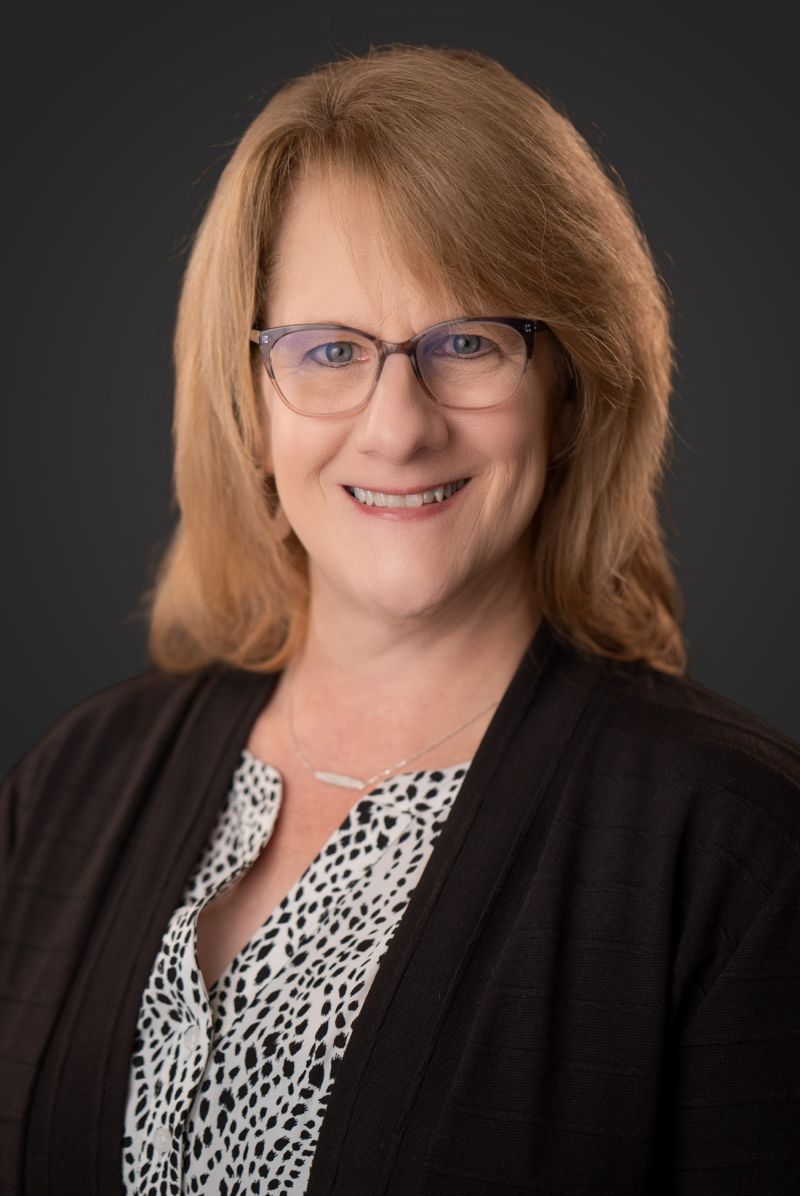
A veteran economic development leader with over 20 years of experience delivering high-impact results for Texas communities. As Executive Director of Kilgore EDC, Lisa has helped attract over $250 million in new investment and nearly 1,700 jobs under contract since 2021. Lisa holds multiple advanced certifications, including MEDP, EDFP, and PCED, and is recognized for her strategic leadership in business recruitment and retention & expansion, workforce development, site readiness, and organizational development. She serves on numerous state and regional boards, and her collaborative, data-informed approach has earned both state and international recognition for excellence in economic development.